
Imagine assigning a shipment to an approved carrier, only to learn that another company is moving the freight without your knowledge. That hidden handoff can expose brokers and shippers to lost visibility, payment disputes, and cargo-security risks. A comprehensive freight fraud prevention process connects carrier approval, driver and equipment verification, shipment monitoring, and delivery records. This guide explains how technology and clear staff procedures can support that process, from carrier assignment through final delivery.

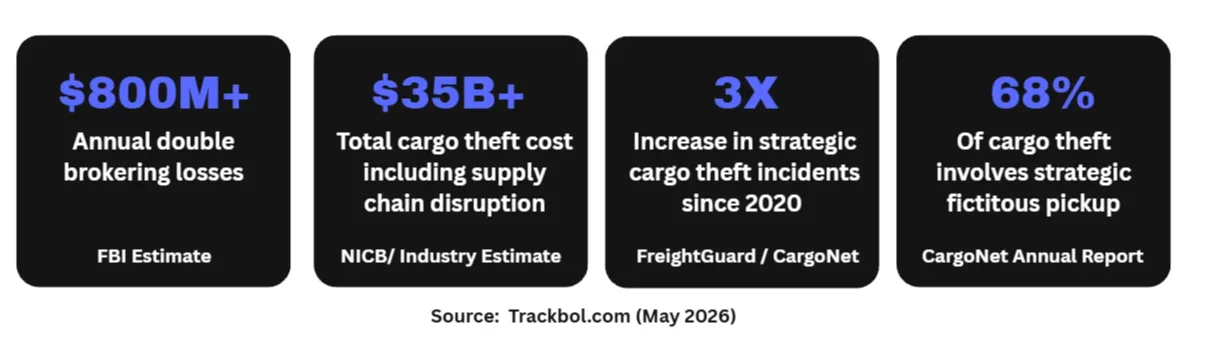
How Big Is The Problem?
Double brokering threatens more than a single shipment. An unauthorized carrier assignment can disrupt communication, delay delivery, leave an honest carrier unpaid, and create disputes over responsibility. Brokers, carriers, and shippers can all be harmed by the same transaction.
86% |
Of survey respondents who had experienced fraud reported double brokering. The April 2025 Broker Insights Survey included more than 700 freight brokers. This result describes that survey group, not all brokers or all shipments. |
|---|
The Scale of the Problem:
Dominant Threat: According to industry surveys (such as Truckstop’s Broker Insights), roughly 86% of brokers who experience fraud identify double brokering as the primary and most destructive threat they face.
Widespread Outbreak: Market volatility has driven a massive surge in unauthorized or malicious load handoffs, plaguing both small independent carriers and large enterprise brokerages.
Criminal Evolution: While it can occasionally stem from innocent miscommunication or overbooking, it is increasingly executed by organized criminal rings using identity theft and compromised MC (Motor Carrier) numbers to siphon funds.
The Challenge of Double Brokering
One common form of double brokering occurs when a carrier accepts a load and secretly assigns it to another carrier without the original broker’s or shipper’s knowledge or approval. The problem is the concealed, unauthorized reassignment, not a properly approved change in equipment or personnel.
For example, a broker assigns a shipment to Carrier A. Carrier A then gives the load to Carrier B without approval. Carrier B may be legitimate and unaware of the deception. If the middleman collects the payment and disappears, Carrier B may remain unpaid while the original broker faces a dispute.
Fraudsters may also impersonate a legitimate carrier using stolen company information. A familiar company name or carrier number is not enough to establish that the person contacting you is authorized to act for that carrier.
As an example, a broker may hire Carrier A; Carrier A then passes the freight to Carrier B without approval. Carrier B might be honest and unaware of wrongdoing, but the middleman can vanish with payment, leaving Carrier B unpaid. Some fraudsters even hijack real carriers’ identities to execute these scams, making detection even harder.
Common Warning Signs of Double Brokering in the Trucking Industry
Information that does not match. The driver’s name, carrier name, truck markings, or equipment details differ from the approved assignment.
Unapproved changes. Pickup instructions, dispatch contacts, or delivery details change unexpectedly without a clear explanation and approval.
Pressure to skip checks. Someone insists that the shipment must move before identity or equipment discrepancies are resolved.
While one mismatched detail alone does not confirm double brokering such as equipment might break downs and, every such anomaly should be questioned carefully. If someone insists on skipping verification steps, treat it as a red flag.
Verify Before Release: Pre-Load Verification
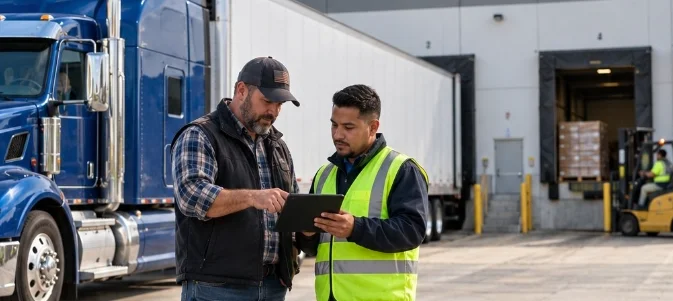
Before freight is released, confirm that the carrier, driver, and equipment handling the load match the approved assignment. Coordinate the broker’s verification work with the shipper’s on-site checks.
1-Verify the carrier and coverage. Review the carrier’s operating authority through FMCSA and confirm insurance with the insurer or agent using independently verified contact information.
2-Confirm the load assignment. Call the carrier through a trusted number. FMCSA recommends checking contact numbers against SAFER and resolving discrepancies before proceeding. [2]
3-Match the driver and equipment. Review the driver’s name, phone number, license, vehicle registration, and tractor and trailer details. Compare truck-side markings and plate information with the approved carrier’s records.
4-Control the pickup. Use a secure, shipment-specific pickup reference. Have authorized shipping staff confirm the arriving driver and equipment, retain the relevant photos, and obtain broker approval for any substitution.
According to Robert of CargoGuard, “Simply checking a carrier’s MC number or insurance certificate is not enough; you must confirm the actual driver and equipment handling your shipment to prevent fraud. ”
Monitor and Respond: Maintaining Shipment Visibility After Pickup
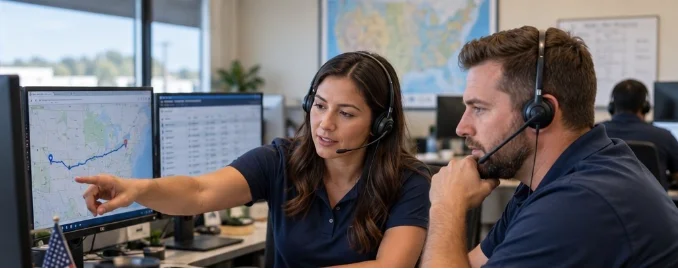
Keep monitoring after the truck leaves the dock. Review shipment updates and stay in contact with the verified driver. Unexpected stops, tracking gaps, or unexplained device changes warrant follow-up, but can also have routine operational or technical explanations.
A device’s location does not, by itself, prove who has the freight. CargoGuard combines tracking, driver-verification tools, and alerts for potential location spoofing. These signals support investigation; they do not guarantee that fraud will be detected or prevented.
When Potential Double Brokering Is Detected: A Repeatable Process
1-Confirm location and custody. Use trusted contacts to establish where the shipment is and who currently controls it.
2-Notify the right people. Inform the shipper, operations lead, and security team so everyone works from the same verified information.
3-Verify requested changes. Do not approve a new delivery location or transfer based solely on an unverified message.
4-Preserve the evidence. Keep communications, location history, driver and truck photos, pickup records, and relevant documents together.
5-Escalate suspected fraud or theft. Promptly involve law enforcement and notify your insurance provider. FMCSA also provides reporting guidance for identity theft and freight fraud. (Keep people safe. Do not ask a driver to confront a suspected fraudster. Coordinate a safe response with a shipper, relevant authorities, and your operations team.)
From Carrier Assignment to Final Delivery
A strong freight fraud prevention process integrates verification and monitoring at every stage of shipment from carrier assignment to final delivery. The process ensures accountability and real-time response capability against double brokering and other fraudulent tactics.
“The biggest gap in freight fraud prevention is the assumption that initial carrier approval covers all later steps. Continuous verification and clear processes are essential to close this gap.” Robert Enfield of CargoGuard |
|---|
Carrier selection |
Verify operating authority, confirm coverage, and validate the carrier’s contact information and load assignment. |
FMCSA records; insurer or agent confirmation; a trusted callback. |
Pre-pickup |
Match the driver, tractor, trailer, and pickup authorization to the approved assignment. |
Identity and equipment records; a secure pickup reference; truck and trailer photos. |
In transit |
Review location updates and alerts. Investigate unexplained gaps or changes with the verified driver. |
GPS tracking; relevant security alerts; documented communications. |
Delivery |
Confirm the destination and receiving details, and collect proof of delivery (POD). |
Delivery records; receiver confirmation; digital POD. |
Documentation |
Retain a record of who handled the freight, what changed, and who approved each exception. |
Shipment records; photos; messages; authorized system integrations. |
Connect Technology to Clear Responsibilities
A supported integration can reduce repeated data entry and help teams review shipment information in their transportation management system (TMS). For a CargoGuard API integration, confirm the available endpoints, data fields, security requirements, and supported events with CargoGuard’s technical team before implementation. Do not assume that every platform feature or TMS connection is available through the API.
Technology integration, like CargoGuard’s API connecting shipment data with Transportation Management Systems (TMS), streamlines verification checks and alert management without disrupting existing workflows. This synergy empowers teams to monitor active shipments and handle alerts efficiently.
Technology should reinforce your process, not replace it. Assign responsibility for reviewing alerts, approving changes, and preserving records so that each issue has a clear owner.
FREQUENTLY ASKED QUESTIONS:
What is double brokering fraud?
Double brokering fraud involves secretly reassigning a shipment without the original broker’s or shipper’s approval. For example, a carrier may accept a load and pass it to another carrier without authorization. The concealed reassignment can create payment, delivery, and cargo-security problems.
Is checking a carrier’s authority and insurance enough?
No. Those checks address the carrier’s business records, but they do not establish who is actually arriving to collect your shipment. Verify the load assignment, driver, and equipment, and have shipping staff compare the arriving truck with the approved details.
Can GPS tracking alone prove who has the freight?
No. GPS tracking reports the location of a device or tracking source. Combine it with driver verification, equipment checks, shipment records, and direct communication to investigate whether the freight remains with the authorized party.
What should happen when pickup details do not match?
Resolve the discrepancy before freight is released. Contact the carrier through trusted channels, determine whether the change is legitimate, and document any approval. A replacement driver or truck may be valid, but the change should not bypass verification.
Summary of Key Takeaways
Verify the actual pickup. Carrier approval is the starting point. The arriving driver, tractor, and trailer must still be checked against the authorized assignment.
Maintain visibility through delivery. Review tracking and communications, investigate meaningful changes, and collect proof of delivery.
Make exceptions visible. Record what changed, why it changed, who verified it, and who authorized the next step.
Treat alerts as prompts to investigate. Use technology to support informed decisions rather than treating a location update or alert as conclusive evidence.

Final Thoughts on Freight Fraud Prevention Process
Freight fraud prevention works best as an end-to-end operating process, not a one-time carrier check. Connect the approved carrier to the verified driver and equipment, keep shipment visibility active, and document the delivery. When information changes, pause long enough to verify the change and obtain the required approval.
Clear procedures help brokers and shipping teams apply these checks consistently. Train staff to recognize discrepancies, keep escalation contacts available, and make sure someone is responsible for reviewing unresolved alerts. The goal is a process your team can follow on every shipment, including when schedules are tight.
Robert, of CargoGuard, concludes, "Freight fraud prevention is not a one-time check but a continuous commitment to connecting every load to the right people and equipment."
Protect your freight with CargoGuard!
Call: CargoGuard, (901) 255-0646 Or Visit: www.mycargoguard.com
Interviewee: Robert L. Enfield, Co-Founder & UX/UI Architect
Robert Enfield is Co-Founder & UX/UI Architect at CargoGuard. His background spans more than 20 years in asset-based trucking and third-party logistics. After seeing how double brokering and cargo theft affected brokers and shippers, he helped shape CargoGuard around the operational challenges his team encountered in the field.
Sources and Image Credits
2025 Broker Insights Survey: original publisher’s release, April 9, 2025. The 86% figure applies to survey respondents who had experienced fraud.
FMCSA, Broker and Carrier Fraud and Identity Theft, updated April 7, 2025. See the agency’s verification and reporting guidance.
CargoGuard, Freight Tracking API. Integration scope and technical requirements must be confirmed for the intended workflow.
Editorial basis: the supplied draft of John Crowder's interview with Robert Enfield, with source checks for survey wording, verification guidance, and API claims. Photos are AI-generated illustrations of U.S. freight operations, not photographs of CargoGuard employees, customers, or software.
This article provides general operational guidance, not legal or insurance advice.




Write A Comment