
Unlocking the Mystery: The Purpose of Ruler Holes
Many of us have casually used a ruler, be it for school tasks or home projects, yet few might think twice about a subtle detail—the small hole at one end. This seemingly inconsequential feature is not just a design quirk; it harbors a purpose steeped in history. Understanding the practicality behind this hole can lead us to appreciate not only our tools but also the evolution of their use. It’s a small feature with big implications for organization and usability in both educational and DIY contexts.
From Slate Boards to Modern Storage: A Brief Historical Overview
The humble ruler's hole has historical significance that stretches back to an era when students scribbled their notes on slate boards. Rather than relying on notepads, children used these boards to practice their writing, conveniently wiping their work clean to start anew. Students ingeniously tied a cleaning cloth to their rulers with a piece of string threaded through the hole. This clever solution ensured that a cleaning rag was ever-present, making it easier for them to maintain their boards. Almost lost to time, this practice laid the groundwork for a design feature that persists to this day: easy storage and accessibility. The tradition has transformed how we perceive not only rulers but everyday tools across various domains.
The Practical Benefits of Ruler Holes
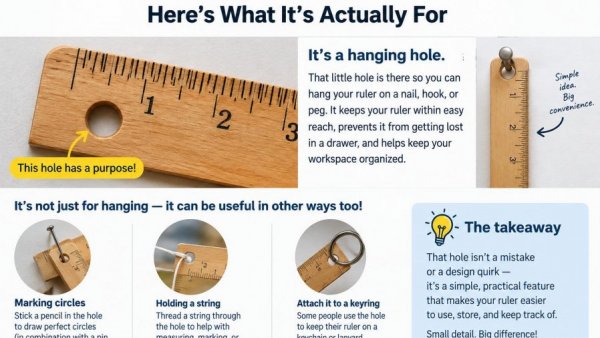
Fast forward to modern-day applications, and the functionality of rulers with holes has expanded. The primary reason for the hole remains simple—it allows for easy storage. Be it a hook, a pegboard, or even a nail, these storage solutions help us keep tools organized and within reach, appealing especially to DIY enthusiasts and crafters.
For instance, longer metal rulers can be cumbersome to store in toolboxes or drawers, and the hole offers a practical solution. But, that's not all. Many rulers today come equipped with multiple holes for specific applications. Take school rulers, for example; these often feature holes that align perfectly with three-ring binders, allowing students to keep their rulers alongside their other essential supplies. With school back in session, this functionality helps students remain organized, making it easier to carry their educational tools without worrying about misplacing them.
Unveiling More Uses: The Versatility of Ruler Holes
What might astonish many is the flexibility utility of these holes extends beyond mere hanging. Specialty rulers, such as those used for quilting or crafting, feature designed hole placements that enable further functionality. They allow crafters to mark circles, align fabric with precision, or guide rotary cutters with ease, showcasing the evolution of the ruler as an indispensable crafting tool.
Conversely, some rulers made specifically for paper crafts incorporate tiny, evenly spaced holes that assist in marking stitch lines or decorative patterns. These thoughtful additions reflect the makers' awareness of users’ needs, providing an enhanced crafting experience. For instance, quilters can greatly benefit from these precise measurements, enabling the creation of beautiful quilt patterns that are visually appealing and well-structured.
How to Choose the Right Ruler for Your Projects
When selecting a ruler, consider not only its length and material but also the presence of any holes that might aid in your specific tasks. A simple plastic ruler may suffice for basic measurements, such as measuring the length of a piece of furniture or the distance between two points on a wall. However, more complex projects may demand the versatility of specialized rulers.
For home improvement projects, a long metal ruler with a hole can easily be hung near your work area, ensuring it’s readily available whenever needed. On the other hand, if you enjoy crafting, a quilting ruler will likely prove invaluable, not just because of the holes, but also because it offers the clarity and precision needed for intricate designs.
A Clutter-Free Solution for Every Home
While some might question the necessity of these holes, the truth is that the usability extends to more casual, daily measurements as well. Even in a simple home setting, a ruler with holes can make life a bit easier, especially when you want to ensure that things stay organized. Rather than having your ruler loose in a drawer where it can get lost or broken, simply hanging it can ensure longevity and easy access.
For those engaged in home improvement or simple DIY tasks, this feature encourages a healthier home environment. An organized workspace not only reduces stress but allows for creativity and innovation to flourish, allowing homeowners to embrace projects that enhance their living spaces. Whether you're measuring for new shelves or planning the next family art project, keeping your tools easily accessible helps maintain a flow of inspiration.
Embracing the Ruler's Unique Features
As we continue our journey in crafting personal and unique spaces, it’s important to celebrate the small details in our tools that make a big difference. By recognizing the historical context and practical applications of ruler holes, we gain appreciation for the thoughtful design that has persisted through generations. Each ruler tells a story not just as a measuring device but as a part of a larger narrative about innovation.
So next time you pull out your ruler, take a moment to appreciate its function and versatility. Whether it’s hanging from a pegboard or standing ready for its next task, it has an intriguing story that emphasizes the value of functionality and history in our everyday lives. That straightforward tool is a bridge connecting the past with the present, combining utility with tradition.
If you've found this exploration of ruler holes enlightening, consider examining other seemingly mundane items around your home. You might be surprised at the depth and utility they harbor. Embrace the journey of discovering the stories in your tools and how they can enrich your crafting, DIY activities, and overall home experience. Every aspect of our homes contributes to our wellbeing, and understanding the utility of our tools is a step toward creating a healthier, more organized, and enjoyable living space.





Write A Comment