Add Row
Add Element
Add Element
Setup Your Button

🎙️MidSouth Life Podcast
Hosted by Jay Young
👉 Listen Now

{"name":"Listen Now","action_type":"1","optin_action_type":"5","form_redirect_type":"1","form_redirect_funnel_url":"68488ab288fa2","form_redirect_custom_url":"","order_form_settings":{"containers":[{"id":"personal-info-wrapper","visible":true,"label":{"id":"of-personal-title","visible":true},"fields":[{"id":"of-full-name","setting":false,"placeholder":"Full Name"},{"id":"of-field-email","setting":false,"placeholder":"Email Address"},{"id":"of-phone-number","setting":true,"visible":false,"require":true,"placeholder":"Enter Your Mobile Phone","additional":{"sms_permission":0}},{"id":"of-gdpr-optin-approval","label":"I Accept To Receive Additional Info","placeholder":"","icon":"fa-mobile","required":0,"visible":0,"system":1,"additional":{"gdpr_optin_approval":"1"}}]},{"id":"shipping-information-wrapper","visible":false,"label":{"id":"of-shipping-title","visible":true},"fields":[{"id":"of-shipping-address","setting":false,"placeholder":"Address"},{"id":"of-shipping-city","setting":false,"placeholder":"City"},{"id":"of-shipping-state","setting":false,"placeholder":"State"},{"id":"of-shipping-zipcode","setting":false,"placeholder":"Postal Code"}]},{"id":"profit-bump-wrapper","visible":true,"otoBgColor":"rgba(219,229,239,1)","otoBorderColor":"rgba(38,71,102,1)","otoTitleBgColor":"rgba(45,78,108,1)","otoArrowsColor":"rgba(255,177,58,1)","fields":[]},{"id":"order-summary-wrapper","visible":true,"orderDynamicBgColor":"rgba(242,242,242,1)","orderDynamicTexColor":"rgba(51,51,51,1)","fields":[]}]},"optin_type":{"showLabels":0,"fields":[{"name":"first_name","label":"Full Name","placeholder":"Enter Your Full Name","icon":"fa-user","required":1,"visible":1,"system":1,"additional":{}},{"name":"last_name","label":"Full Name","placeholder":"Enter Your Full Name","icon":"fa-user","required":1,"visible":1,"system":1,"additional":{}},{"name":"email","label":"Email","placeholder":"Enter Your Email","icon":"fa-envelope","required":1,"visible":1,"system":1,"additional":{}},{"name":"mobile_phone","label":"Mobile Phone","placeholder":"Enter Your Mobile Phone","icon":"fa-mobile","required":0,"visible":0,"system":1,"additional":{"sms_permission":0}},{"name":"fields_labels","label":"","placeholder":"","icon":"","required":0,"visible":1,"system":1,"additional":{}},{"name":"captcha","label":"Captcha","placeholder":"","icon":"","required":1,"visible":1,"system":1,"additional":{}},{"name":"gdpr_optin_approval","label":"SSBBY2NlcHQgVG8gUmVjZWl2ZSBBZGRpdGlvbmFsIEluZm8=","placeholder":"","icon":"fa-mobile","required":0,"visible":1,"system":1,"additional":{"gdpr_optin_approval":"1","sms_permission":0}}],"customFields":[],"sortedFields":[{"name":"first_name","label":"Full Name","placeholder":"Enter Your Full Name","icon":"fa-user","required":1,"visible":1,"system":1,"additional":{}},{"name":"first_name","label":"Full Name","placeholder":"Enter Your Full Name","icon":"fa-user","required":1,"visible":1,"system":1,"additional":{}},{"name":"last_name","label":"Full Name","placeholder":"Enter Your Full Name","icon":"fa-user","required":1,"visible":1,"system":1,"additional":{}},{"name":"email","label":"Email","placeholder":"Enter Your Email","icon":"fa-envelope","required":1,"visible":1,"system":1,"additional":{}},{"name":"mobile_phone","label":"Mobile Phone","placeholder":"Enter Your Mobile Phone","icon":"fa-mobile","required":0,"visible":0,"system":1,"additional":{"sms_permission":0}},{"name":"captcha","label":"Captcha","placeholder":"","icon":"","required":1,"visible":1,"system":1,"additional":{}}],"design":{"form_background_color":"rgb(245, 245, 245)","field_stroke":{"size":"1","color":"rgb(220, 220, 220)"},"field_icons":1,"button_color":"rgb(255, 158, 0)","button_stroke":{"size":"0","color":"rgba(255, 255, 255, 0.2)"},"button_box_shadow_color":"none","field_size":"small","label_size":"16","label_color":"rgb(0, 0, 0)","input_color":"rgb(52, 152, 219)","control_text_color":"rgb(0, 0, 0)","control_text_size":"15"},"mappedFields":[]},"redirect_type":{"url":"https://midsouthlife.com/podcast","target":0},"next_step":{"value":"68488ab288fa2"},"click_to_email":{"value":""},"click_to_call":{"value":""},"jump_to_block":{},"content":{"header_text":"PHNwYW4gc3R5bGU9ImZvbnQtc2l6ZToyNHB4OyBmb250LWZhbWlseTonb3BlbiBzYW5zJzsiPjxzcGFuIHN0eWxlPSJsaW5lLWhlaWdodDoxLjRlbTsiPldlIEFyZSBFeGNpdGVkITwvc3Bhbj48L3NwYW4+","content_text":"PHNwYW4gc3R5bGU9ImZvbnQtc2l6ZTo0OHB4OyBmb250LWZhbWlseTonb3BlbiBzYW5zJzsiPjxzcGFuIHN0eWxlPSJsaW5lLWhlaWdodDowLjllbTsiPjxzdHJvbmc+UExFQVNFIEZJTEwgT1VUIFlPVVIgSU5GTyAgQkVMT1cgVE8gU1VCU0NSSUJFPC9zdHJvbmc+PC9zcGFuPjwvc3Bhbj4=","button_text":"PHNwYW4gc3R5bGU9ImZvbnQtc2l6ZToyN3B4OyBmb250LWZhbWlseTonb3BlbiBzYW5zJzsiPjxzcGFuIHN0eWxlPSJsaW5lLWhlaWdodDoxZW07Ij48c3Ryb25nPlNFQ1VSRSBNWSBTUE9UPC9zdHJvbmc+PC9zcGFuPjwvc3Bhbj4=","spam_text":"PHNwYW4gc3R5bGU9ImxpbmUtaGVpZ2h0OjEuMmVtOyI+V2UgaGF0ZSBTUEFNIGFuZCBwcm9taXNlIHRvIGtlZXAgeW91ciBlbWFpbCBhZGRyZXNzIHNhZmU8L3NwYW4+","sms_text":"UmVjZWl2ZSBTTVMgVGV4dCBVcGRhdGVzIC0gPHNwYW4+b3B0aW9uYWw8L3NwYW4+","sms_text2":"SSBBY2NlcHQgVG8gUmVjZWl2ZSBBZGRpdGlvbmFsIEluZm8="},"email_confirmation":{"enable":1,"subject":"V2UgQXJlIEV4Y2l0ZWQhIFlvdXIgSW4h","message":""},"integrations":[],"automation_enable":0,"thank_you":{"type":"popup","redirect_url":"","popup_options":{"background_color":"#ffffff","headline_visible":1,"icon_visible":1,"icon_url":"//my.funnelpages.com/assets-pb/images/thankyou-popup-icon.png","subheadline_visible":1,"button_visible":1,"button_color":"#ffa800","headline_text":"PHNwYW4gc3R5bGU9ImxpbmUtaGVpZ2h0OjEuNGVtOyI+VGhhbmsgWW91IEZvciBDb250YWN0aW5nIFVzPC9zcGFuPg==","subeadline_text":"PHNwYW4gc3R5bGU9ImxpbmUtaGVpZ2h0OjEuNGVtOyI+UGxlYXNlIENoZWNrIFlvdXIgRW1haWw8YnIgLz5XZSBXaWxsIEJlIEZvbGxvd2luZyBVcCBTaG9ydGx5PC9zcGFuPg==","button_text":"Q2xvc2U="}}}
Add Element

Add Element
UPDATE
Add Element
  • Home
  • Categories
    • Outdoor Living
    • MidSouth Life Podcast
  • Local Business Spotlights
  • Chiropractic & Physical Wellness
  • Dental & Preventative Care
  • Events & Happenings
  • Business Directory
  • Local Expert Interview
October 16.2025
3 Minutes Read

Discover the Health Benefits of Outdoor Adventure Hunting in the Midsouth

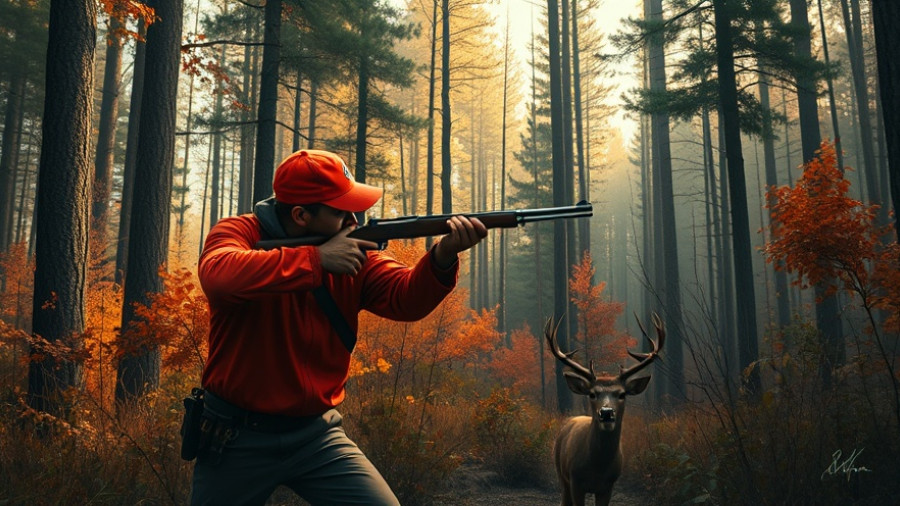
Vintage hunting scene illustrating health benefits of outdoor adventure hunting.

The Thrill of the Hunt: Personal Pursuits and Connections

In the rustic wilderness of Minnesota, amidst thick forests and serene lakes, the thrill of hunting combines physical exercise with mental engagement. This vivid world is not only about tracking deer but also about building memories and forging connections with nature and fellow enthusiasts. For homeowners across the MidSouth, embracing outdoor adventures can lead to healthier living and appreciation for the environment around us.

Every Hunter's Journey: Why We Hunt

Whether tracking a deer’s movements or learning a new skill, hunting offers rich experiences that resonate beyond sport. In the case of Andy, a novice hunter, his adventure began with uncertainty—he was lost, yet found a deep connection with the land and the thrill of bringing home his first buck. Each moment spent waiting patiently in silence or trekking through the wilderness becomes part of a larger narrative about persistence, camaraderie, and understanding one’s limitations.

Health Benefits of Outdoor Activities

Hunting can significantly contribute to both physical and mental health. For homeowners in the MidSouth who prioritize wellness, outdoor activities like hunting can enhance cardiovascular health, improve stamina, and encourage mindfulness. The calming effect of nature, combined with the excitement of the hunt, helps ease stress levels and boosts mental well-being. Engaging in outdoor activities promotes not only personal fitness but also provides opportunities for family bonding.

Unique Stories: More Than Just a Buck

The stories crafted during these excursions are just as valuable as the trophies earned. The narrative of Andy's journey to retrieve his buck wasn’t merely about the hunt but also about companionship, lessons learned, and the joy of being outdoors. His experience encapsulates something deep and relatable—often the journey makes the hunt memorable, rather than the outcome. For homeowners seeking meaningful experiences, these tales can inspire them to capture their own moments of adventure.

Cherishing Our Connection With Nature

Understanding the essence of hunting connects us with our natural environment. It urges us to protect and appreciate the wildlife around us. Each encounter with nature reinforces the importance of conservation among community members in the MidSouth. By participating in outdoor pursuits, individuals contribute to the preservation of these landscapes for future generations.

What You Can Do: Embrace the Outside and Stay Mindful

For homeowners in the area, it's vital to seek out opportunities for outdoor adventures and explore personal interests that promote health and wellness. Seeking local hunting workshops and joining community-led outdoor activities can enhance one’s skill set while establishing meaningful connections with neighbors. Sharing stories and experiences around fireside chats can enrich relationships, forming a tight-knit community.

Conclusion: Step Into the Outdoors

Outdoor activities, whether they include hunting, hiking, or camping, can have profound impacts on our well-being. By stepping outside, we not only improve our physical health but also connect with our surroundings and each other. So, why not take that first step into the outdoors?

Join or plan a local outdoor event this weekend! Choices abound—enjoy a quiet hike, learn the skills of hunting, or simply explore nature with a friend. Dive into the adventure of a lifetime.

Outdoor Living

36 Views

0 Comments

Write A Comment

*
*
Related Posts All Posts
01.15.2026

How Hot Cropping Influences Duck Migration—A Guide for MidSouth Homeowners

Update Hot Cropping's Impact: A Deep Dive into Duck Migration The practice of flooding corn to attract ducks has dominated conversations among hunters in the MidSouth, especially as the winter migration of mallards shows significant changes. Homeowners in this region who care about wildlife and the health of their local environment deserve to understand how these agricultural strategies affect both ducks and the landscape. The concerns surrounding flooded corn—a practice termed ‘hot cropping’—have recently gained traction, particularly since claims about its unsportsmanlike nature speak to broader ecological implications. Understanding Hot Cropping: Challenges & Opportunities At the heart of this debate is the constant tension between agricultural practices and ecological integrity. Senator John Kennedy of Louisiana has laid bare these complexities, expressing fears that heated waterfowl debates reveal discrepancies in how floodwaters interact with duck migrations. These private landowners flooding their fields may unintentionally compress the duck populations, disrupting their natural migration routes. However, experts suggest that the winter weather patterns play a more decisive role than previously thought. According to biologist James Calicutt, the number of mallards reaching traditional wintering grounds in the South has decreased not merely due to hot cropping but primarily because of milder winters. Birds used to move south as surface waters froze, while today’s weather may lead to them lingering in central or northern regions. It paints a picture that might negate hot cropping as an unequivocal villain. The Science of Waterfowl Migration: Weather vs Crop Flooding An interesting facet of this conversation is the recent research that challenges previously held assumptions about the role of flooded corn in duck populations. While the ability to attract ducks with flooded farms exists, the bigger picture shows ducks migrating based on conditions rather than just available food sources. Mallards, especially, are strong survivors and tend to stay closer to their breeding grounds in moderate climates where energy demands are less. In this context, flooded corn does serve a purpose but doesn’t single-handedly determine migration patterns. Debunking Myths: Is Flooded Corn Really a Problem? Despite some hunters blaming flooded corn for reduced mallard populations, data reveals that declines are a widespread concern across the Mississippi Flyway. For instance, Louisiana has exhibited drastic drops in mallard harvests over the past decades. However, it’s crucial to recognize that similar declines can also be observed in states less associated with hot cropping, such as Missouri and Arkansas. Therefore, it stands to reason that this issue is multifactorial, warranting broader ecological shifts as a focal point for improvement. Habitat Health: Enhancing Duck Populations Beyond Hot Cropping Focus on restoring and managing essential habitats along the Mississippi Flyway could provide a pathway forward. Biologists agree that revitalizing natural landscapes is a priority over restricting flooded corn practices. Addressing habitat loss, particularly that caused by climate change, substandard agricultural practices, and urban encroachment will be a critical piece of the puzzle in enhancing duck populations. Healthy ecosystems can offer diverse food sources and environments for wintering waterfowl. Personal Responsibility: What Homeowners Can Do Understanding these dynamics equips homeowners and environmental enthusiasts in the MidSouth with knowledge. By encouraging sustainable farming practices and participating in habitat restoration initiatives, local residents can significantly impact the health of the ecosystems surrounding them. Whether it’s planting supportive crops, participating in local conservation programs, or advocating for sustainable practices, everyone can contribute. Call to Action: Let's Help Our Wildlife For homeowners interested in playing a role in supporting waterfowl populations and overall wildlife health, consider local volunteer programs and resources that focus on habitat restoration and sustainable practices. Together, we can foster an environment that serves both the wildlife and the community.

01.14.2026

Culling Cougars in Utah: A Controversial Experiment on Deer Populations

Update Understanding the Culling of Cougars in Utah In an effort to understand how predation impacts mule deer populations, the Utah Division of Wildlife Resources (DWR) has launched a controversial culling program targeting mountain lions. Beginning in late 2025, this initiative spans six wildlife management units, specifically Boulder, Monroe, Stansbury, Pine Valley, Wasatch East, and Zion. The DWR’s objective is straightforward yet contentious: to determine whether a reduction in cougar numbers could lead to a rebound in deer populations, a critical prey for these big cats. While some support the study, others, including numerous hunters and conservationists, fear that such actions may disrupt the delicate balance of the ecosystem. The Neutral Impact on Ecosystems Critics of the culling cite concerns that the relationship between mountain lions and deer isn't solely a predator-prey dynamic. Experts argue that various environmental factors profoundly influence deer populations, including climate, habitat quality, and human activities. According to David Stoner, a wildlife specialist with Utah State University, while predation can limit deer growth under certain circumstances, a multitude of variables also plays significant roles in deer population dynamics. Stakeholder Perspectives and Conflicts This debate has polarized stakeholders in Utah. Houndsmen, who play a vital role in maintaining cougar populations, voice concerns that the culling could lead to a rise in trapping accidents involving their hunting dogs. Their protests express a mixture of fear and frustration over the DWR’s methods, as they strive to find a balance between effective wildlife management and local hunting practices. On the other hand, groups like the Utah Wool Growers Association argue that managing predator numbers is essential for preserving deer populations, thus supporting the need for the study. The Future of Deer Populations and Cougars One fundamental question remains: can reducing predators significantly impact deer herds? Some scientists believe that lower predator numbers might allow a greater deer survival rate. However, this theory is countered by insights from conservation groups highlighting the risks and long-term effects of such drastic measures. With deer populations historically declining in Utah, the ecological implications of the culling remain to be seen over the study's three years. Considering Planned Ecosystem Management The DWR is tasked with a daunting challenge: how to manage wildlife populations effectively to ensure the health of both prey and predator species. The 2020 state law mandating predator population management when big game quantities fall below optimal levels further complicates this issue. Some experts believe that improving habitat, rather than solely reducing predator numbers, may yield better long-term results for deer and other wildlife. Community Response and Call to Action The community response to the culling program has been mixed, reflecting broader societal debates surrounding wildlife management. As public awareness and concern for animal welfare grow, it is crucial for Utah residents—especially homeowners in the MidSouth—to engage with local wildlife managers. Understanding the implications of such initiatives can empower communities to advocate for balanced, science-backed wildlife management strategies that respect both predator and prey. For homeowners who care about their surrounding environment and the well-being of wildlife, staying informed and actively participating in discussions regarding wildlife management can create a positive impact. Don't sit back; get involved by reaching out to local wildlife authorities, attending community meetings, or joining conservation efforts. Let your voice be heard regarding wildlife policies that affect our beautiful landscapes.

01.13.2026

Why Trapping is Essential for Wildlife Management and Community Health

Update The Crucial Role of Trapping in Today's EcosystemTrapping might conjure images of the past, but in today's world, it remains vital to maintaining ecological balance. As homeowners in the MidSouth, the significance of trapping extends beyond mere nostalgia; it affects our health, safety, and the overall well-being of our community.Understanding the Importance of Ethical TrappingEthical trapping practices are designed to protect wildlife while managing populations effectively. This methodology allows wildlife experts to gather essential data about various species without causing undue harm. By employing humane traps, they assess population dynamics that are crucial for the survival of endangered species and the maintenance of biodiversity.Managing Overpopulation and DiseaseOne of the paramount reasons for effective trapping is managing overpopulation in wildlife. Excessive numbers of certain species can lead to significant resource depletion and disease spread within animal communities and even to human populations. As seen in Alabama, the unchecked growth of furbearers like raccoons and coyotes has direct impacts on agriculture and human health, highlighting the necessity of responsible population control through trapping.A Cultural Perspective on TrappingTrapping has deep historical roots in American culture, serving as a means of commerce and sustenance. It is not merely an ecological practice; it’s intertwined with our heritage, imparting vital skills and knowledge to future generations. By understanding and respecting the cultural significance of trapping, we can bridge modern conservation strategies with historical practices.Benefits of Wildlife Management through TrappingTrapping plays a crucial role in preventing ecological damage, especially in regions prone to invasive species. These invaders often outcompete native wildlife, leading to imbalanced ecosystems. Through trapping, conservationists can target these invasive species, allowing native populations to thrive. Homeowners in the MidSouth can benefit directly from these efforts, as healthier ecosystems lead to improved local environments.Community Engagement and ConservationIf we want to be proactive about wildlife management, community engagement is key. By getting involved with local conservation organizations, residents can support ethical trapping initiatives that ensure both wildlife and community health. Gathering knowledge from local trappers and participating in workshops could enhance our understanding of the delicate balance between species.As we grapple with the complexities of our current environment, understanding the role of trapping in wildlife management is more important than ever. Whether you live near open lands or urban areas, the interconnectedness of our ecosystems demands a community response that supports and values ethical practices. By advocating for these practices, we actively participate in preserving our natural heritage for future generations. Take Action, Be InformedFor those interested in learning more about the ethical dimensions of wildlife management, consider visiting local conservation websites or participating in community discussions on animal welfare and environmental health. By becoming informed, you can contribute to a healthier ecosystem and potentially influence local policies that affect wildlife management in your area.

Terms of Service

Privacy Policy

Core Modal Title

Sorry, no results found

You Might Find These Articles Interesting

T
Please Check Your Email
We Will Be Following Up Shortly
*
*
*